Table of Contents
In the food, chemical, and agricultural industries, the need for rapid and precise packaging of granular materials has led to the widespread adoption of automated granule filling machines.
This equipment has revolutionized how businesses handle bulk products; by automating the filling process, manufacturers can save time, reduce waste, and ensure product safety and hygiene.

Understanding the Function of Automatic Granule Filling Machines
At its core, an automatic granule filling machine is designed to dispense granular materials into containers—such as pouches, jars, or bottles—with remarkable accuracy. The system typically integrates several components:
- Feeding mechanism: Moves the material from the hopper into the filling section.
- Weighing or volumetric unit: Measures the precise amount of product for each fill.
- Filling head: Directs granules into packaging without spillage.
- Control system: Uses sensors and programmable logic controllers (PLC) to ensure precision and automation.
Depending on the model, these machines can operate based on weight (gravimetric filling) or volume (volumetric filling). For industries that require exact product quantities—like food or chemicals—weight-based systems are preferred for their accuracy.
Why Manufacturers Are Switching to Automated Filling
The shift toward automation is not simply a matter of trend—it’s a necessity driven by operational demand. The automatic granule filling machine brings multiple benefits that address real production challenges:
- Consistent Accuracy: Manual filling often leads to human error, causing inconsistent quantities and product loss. Automated machines use precision weighing systems to deliver uniform output every time.
- Speed and Efficiency: High-speed motors and synchronized systems allow for continuous operation, with some models capable of handling thousands of fills per hour. This drastically improves throughput and reduces downtime.
- Reduced Labor Costs: Automation minimizes the need for manual supervision, allowing operators to focus on quality control or system monitoring instead.
- Material Optimization: Machines can adjust filling parameters automatically, minimizing waste and optimizing product use.
- Versatility: With adjustable settings, one machine can handle multiple granule sizes and packaging types, from small pouches to large containers.
Technological Advancements Driving Efficiency
Modern automatic granule filling machines are not static pieces of equipment—they continuously evolve with technology. Current models often include:
- Touchscreen Controls: User-friendly interfaces for quick adjustments and monitoring.
- Servo Motor Drives: Provide smooth, precise motion control with energy efficiency.
- Automatic Error Detection: Sensors identify and correct misfeeds or blockages instantly.
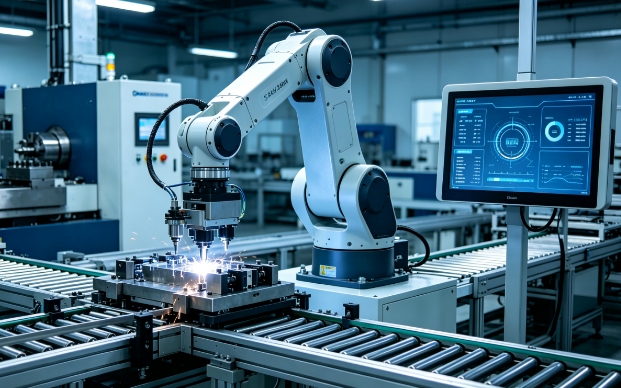
- Integration with Conveyor Systems: Enables seamless packaging line automation.
- Dust Collection Units: Maintain a clean workspace and prevent material loss during filling.
- These innovations help factories improve reliability, reduce maintenance costs, and ensure every packaging cycle meets consistent quality standards.
Factors to Consider When Choosing an Automatic Granule Filling Machine
- Type of Material: Flow characteristics, granule size, and moisture content can affect filling accuracy.
- Packaging Format: Determine if the machine supports pouches, bottles, jars, or bulk bags.
- Filling Speed and Accuracy Requirements: Higher accuracy machines may trade speed for precision.
- Machine Capacity: Consider both current production volume and potential future expansion.
- Ease of Cleaning and Maintenance: Machines used for food or chemicals should have quick-disassembly parts and stainless steel surfaces.
- After-Sales Support: Reliable manufacturers provide training, spare parts, and technical service.
A good machine should align with both the product and operational workflow to maximize efficiency and reduce downtime.
Sustainability and Energy Efficiency in Packaging Automation
Sustainability is becoming a major consideration in industrial design, and the automatic granule filling machine is no exception. Newer models focus on energy-efficient motors, minimal air consumption, and reduced material waste.
For instance, servo-controlled filling systems use only the energy required for each cycle, cutting power consumption compared to traditional pneumatic systems. Additionally, precision filling helps reduce product overuse—saving raw materials and minimizing packaging waste.
By combining efficiency with environmental responsibility, modern filling systems align with global sustainability goals while keeping operating costs under control.
Conclusion
Automated pellet filling machines combine precision, efficiency, and reliability, helping industries meet growing consumer demands without sacrificing quality. From food packaging to industrial manufacturing, these machines simplify processes, reduce costs, and support the achievement of sustainability goals.
0