Table of Contents
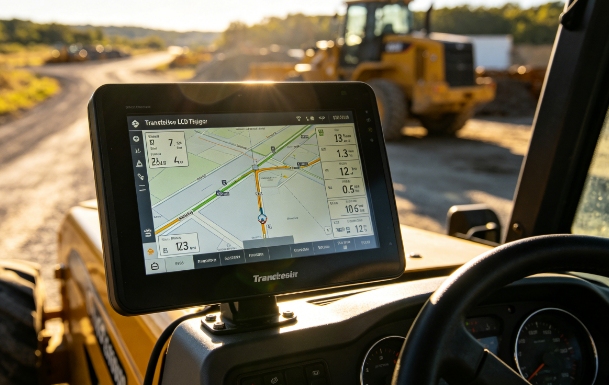
The transflective LCD is known for improving battery efficiency in portable devices by combining ambient light reflection with adjustable backlighting. Unlike traditional LCDs that rely heavily on constant backlights, it uses natural light in bright environments and activates backlighting only when needed. This adaptive design reduces power consumption and makes it ideal for GPS devices, handheld tools, medical instruments, and other battery-powered outdoor electronics.
How Display Technology Affects Power Consumption
To understand the battery impact of a transflective LCD, it is important to first look at how display systems consume energy in portable devices.
- Backlight as the main power consumer: In traditional LCDs, the backlight often accounts for the majority of total energy usage, especially at high brightness levels.
- Constant illumination requirement: Standard displays must maintain consistent backlight output regardless of environmental lighting, leading to continuous power drain.
- Adaptive lighting advantage: Transflective designs reduce reliance on backlight in bright environments by utilizing reflected ambient light.
- Variable energy demand: Power usage changes dynamically depending on lighting conditions, unlike fixed-output display systems.
This fundamental difference is what gives the transflective LCD a potential advantage in extending battery life.
Energy-Saving Mechanism in Portable Usage
One of the most important reasons this technology improves battery performance is its ability to reduce backlight dependency during real-world use.
Key energy-saving behaviors include:
- Sunlight-assisted visibility
In outdoor environments, the display uses natural light reflection, allowing the backlight to operate at lower intensity or even minimal levels. - Automatic brightness adaptation
The built-in light sensor adjusts screen brightness based on surrounding environmental conditions, thereby preventing unnecessary energy consumption. - Reduced continuous power draw
Instead of running the backlight at full strength all the time, energy usage is distributed more efficiently. - Improved efficiency during daytime use
Portable devices used outdoors benefit the most, as ambient light replaces much of the artificial lighting demand.
These mechanisms make the transflective LCD especially effective in extending operational time for mobile devices.
Real Battery Life Benefits in Portable Devices
The impact on battery life becomes clearer when examining actual usage scenarios in portable electronics.
- GPS navigation devices: These devices often operate outdoors, where ambient light reduces backlight dependency, significantly extending runtime.
- Handheld industrial scanners: Warehouse and field workers benefit from longer shift usage without frequent charging interruptions.
- Medical portable monitors: Emergency devices gain extended operational stability during field use, where power access is limited.
- Military field equipment: Devices used in tactical environments require maximum energy efficiency for long missions.
In these applications, the transflective LCD can noticeably improve battery longevity, especially during daytime outdoor operations.
Limitations That Affect Battery Performance
While the technology offers clear advantages, its impact on battery life is not always consistent in every situation.
- Indoor environment dependency: In low-light conditions, the display still relies on backlighting similar to traditional LCDs.
- Reduced efficiency at night: Without ambient light, energy savings are minimal compared to daytime performance.
- Higher baseline complexity: The dual-layer design may introduce slight inefficiencies in certain configurations.
- Device optimization factors: Battery improvement also depends on system design, brightness settings, and usage patterns.
These limitations mean that while the transflective LCD can improve battery life, the extent of improvement depends heavily on the environment and usage behavior.
Comparison With Standard LCD Displays
When compared with conventional LCD technology, its energy-saving advantages become much more noticeable.
- Traditional LCD energy usage: Relies entirely on backlight brightness, leading to higher and more stable power consumption.
- Adaptive efficiency advantage: The hybrid design reduces energy demand when ambient light is available.
- Outdoor vs indoor performance difference: Benefits are most noticeable outdoors, while indoor differences are less significant.
- Long-term usage impact: Over time, portable devices using this display type can achieve better average battery performance in mixed environments.
This comparison highlights why the transflective LCD is often chosen for outdoor and field-oriented portable devices.
Conclusion
The transflective LCD can indeed improve battery life in portable devices, especially in environments with strong ambient light, such as outdoor or semi-outdoor conditions. By reducing dependence on backlighting and intelligently utilizing natural light, it lowers overall power consumption and extends operating time. However, its efficiency gains are most noticeable during daytime or bright environments, while indoor performance remains similar to traditional LCDs. Overall, this technology offers a practical balance between visibility and energy efficiency, making it an excellent choice for portable devices that require long-lasting battery performance in variable lighting conditions.
0