Table of Contents
As global communication networks continue to evolve toward higher speed, larger capacity, and greater density, the limitations of traditional fiber optic cables are becoming more apparent, especially in terms of space utilization and scalability. Micro fiber optic cable, with its smaller outer diameter, higher fiber density, and flexible deployment characteristics, has emerged as a key solution in modern fiber network construction. This article provides a detailed overview of the main application scenarios of micro fiber optic cable. Helping readers better understand its practical value across different network environments.

1. FTTH (Fiber to the Home) Network Deployment
In FTTH network construction, particularly in urban areas, challenges such as limited duct resources, narrow building spaces, and complex installation environments are very common.
Thanks to its compact structure, lightweight design, and small diameter, micro fiber optic cable is especially suitable for installation in micro-ducts, existing underground conduits, and confined indoor spaces, significantly improving deployment efficiency.
Its main advantages include:
- Improved duct utilization: allowing a higher number of fiber cores to be installed in the same duct space, leaving sufficient capacity for future subscriber growth.
- Reduced installation difficulty: easier cable blowing and pulling processes that shorten construction time and reduce labor costs.
- Support for future network expansion: enabling smooth upgrades without repeated excavation or duct replacement.
As a result, micro fiber optic cable has become an essential solution for achieving high-density access and long-term cost efficiency in FTTH projects.
2. High-Density Cabling in Data Centers
With the rapid development of cloud computing, big data, and artificial intelligence, data centers are facing increasing demands for bandwidth, transmission speed, and cabling density. Traditional fiber optic cables often lead to congestion in high-density environments, making cable management and maintenance more difficult. In contrast, micro fiber optic cable allows a greater number of fibers to be deployed within limited physical space, significantly enhancing cabling efficiency.
Key advantages in data center applications include:
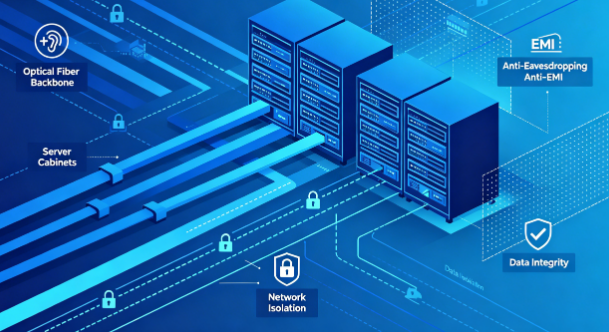
- Support for high-density fiber management: ideal for backbone connections and high-port-count interconnection scenarios.
- Improved airflow and cooling efficiency: reduced cable congestion helps optimize thermal performance.
- Simplified rack and pathway cabling: cleaner layouts that lower operational and maintenance complexity.
These benefits make micro fiber optic cable a highly competitive option for data center upgrades and capacity expansion.
3. 5G and Mobile Communication Transport Networks
The deployment of 5G networks places unprecedented demands on fiber quantity and transmission performance, particularly for fronthaul, midhaul, and backhaul connections between base stations and core networks.
Micro fiber optic cable enables rapid and efficient deployment of high-capacity fiber networks even when existing duct resources are limited, making it well suited for high-density 5G network construction.
Typical applications in 5G scenarios include:
- Base station fronthaul fiber connections: supporting low latency and high bandwidth transmission requirements.
- Network upgrades in dense urban areas: increasing capacity without the need for new duct construction.
- Connections for small cells and micro base stations: providing flexible deployment in complex environments.
Its high-density and scalable design helps operators control network deployment costs while enhancing overall network coverage and performance.
4. Metropolitan and Backbone Network Expansion
In metropolitan and backbone networks, traffic demand continues to grow, while the cost of building new ducts and infrastructure remains high. Network operators often seek to expand capacity using existing physical resources.
By deploying micro fiber optic cable, it is possible to significantly increase fiber counts within current ducts and routes, thereby enhancing overall transmission capacity.
This approach offers several key benefits:
- High return on investment: minimizing redundant construction and reducing capital expenditure.
- Greater network flexibility: allowing easier adjustments and future network reconfiguration.
- Long-term scalability: meeting bandwidth growth requirements over many years.
Consequently, micro fiber optic cable plays an increasingly important role in metropolitan and backbone network upgrades.
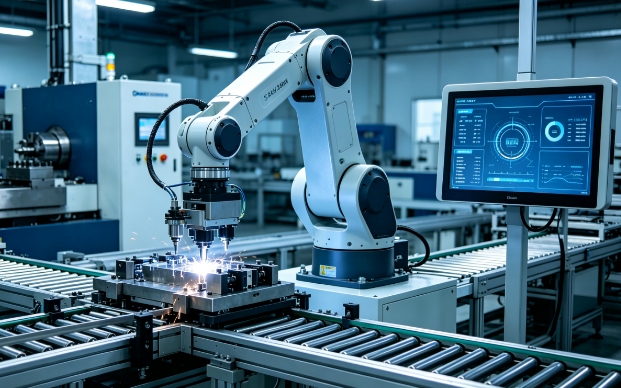
5. Industrial and Smart Infrastructure Applications
In industrial communication systems and smart infrastructure projects. Networks often operate in complex environments and require long-term stability, reliability, and flexible installation.
Due to its compact size, light weight, and ease of routing, micro fiber optic cable is well suited for such demanding applications and is being adopted more widely across various industries.
Common applications include:
- Industrial park communication networks: supporting high-speed and stable data transmission.
- Smart city infrastructure: used in transportation, security, and public service systems.
- Monitoring and sensing system connections: enabling real-time data transmission and remote management.
These applications further expand the practical use cases of micro fiber optic cable.
Conclusion
Overall, micro fiber optic cable is widely used in FTTH networks, data centers, 5G communications, metropolitan networks, and industrial communication systems. Its high fiber density, compact structure, and strong scalability make it an effective solution for addressing the growing capacity and space challenges of modern communication networks. As fiber network deployment continues to advance. Micro fiber optic cable is expected to play an even more critical role in future communication infrastructure.
0