Table of Contents
With the continuous advancement of technology, fibre optic technology has become widely used across various industries, including telecommunications, healthcare, industrial control, and energy. In certain specialised applications, the safety and durability of fibre optics are critical, especially in extreme environments. In these scenarios, armoured fibre optic cable, a reinforced type of fibre optic cable, offers enhanced protection. But can armoured fibre optic cables maintain performance and reliability in high-temperature environments? This article explores their feasibility for high-temperature applications.
What is an Armoured Fibre Optic Cable?
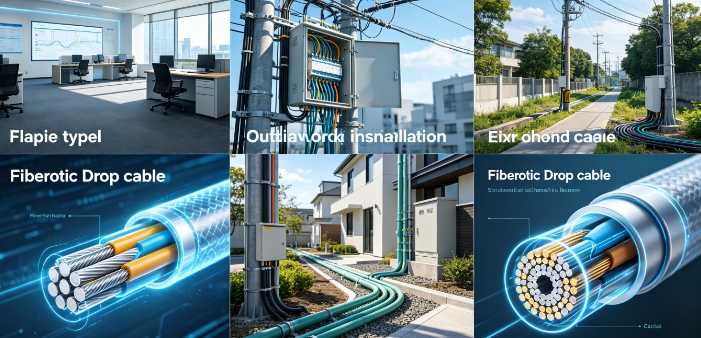
An armoured fibre optic cable is a standard fibre optic cable enhanced with a protective layer made of metal or other durable materials. Common armouring materials include steel tape, copper, or corrosion-resistant alloys. The armoured layer increases tensile strength, compressive resistance, and protection against environmental hazards. This shielding not only guards against physical damage but also helps ensure consistent signal transmission in harsh conditions.

Requirements for Cables in High-Temperature Environments
For reliable operation in high-temperature conditions, cables must meet several key requirements:
- High-temperature resistance: Cable materials, including the fibre core, cladding, and outer jacket, must withstand elevated temperatures without melting, softening, or losing mechanical integrity. This ensures the cable maintains its structure and performance even in prolonged heat exposure.
- Low thermal expansion: Materials expand and contract when heated or cooled. If a cable’s components have high thermal expansion, it may lead to microbending in the fibre, mechanical stress, or even damage to the armouring. Low-expansion materials help maintain dimensional stability and prevent performance loss.
- Oxidation resistance: High temperatures accelerate oxidation, especially in metal armouring. Without proper corrosion-resistant materials or coatings, the cable may degrade over time, reducing its protective function and potentially affecting signal transmission.
- Stable signal performance: Heat can change the refractive index of the fibre or cause microbending in the core, leading to signal attenuation or distortion. Cables designed for high temperatures maintain consistent optical and electrical properties, ensuring reliable data transmission in extreme conditions.
High-Temperature Performance of Armoured Fibre Optic Cables
While the metal armouring in armoured fibre optic cables adds mechanical protection, it also affects performance in high-temperature environments:
- Metal layer tolerance: Different metals have varying temperature limits. Steel typically withstands temperatures up to ~200°C, while copper may oxidise above ~150°C. Choosing appropriate materials and coatings is crucial for high-temperature applications.
- Optical fibre tolerance: The core fibre, usually made from silica, can typically operate stably between 100°C and 200°C. Above 200°C, performance may degrade. The overall high-temperature tolerance of the cable depends on the fibre and armouring combination.
- Protective function: Armouring mainly protects against mechanical damage rather than high heat. However, it can prevent fibre breakage caused by external forces in hot environments. For extremely high temperatures, specially designed high-temperature fibre optic cables may be required.
Practical Applications in High-Temperature Environments
Armoured fibre optic cables are already used in several high-temperature settings:
- Oil and gas extraction: In oil fields or gas extraction sites, ambient temperatures can be high. Armoured cables provide both mechanical protection and stable signal transmission within safe temperature ranges.
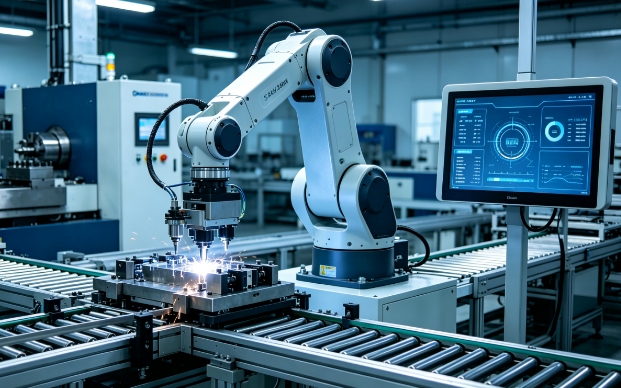
- Metallurgy: Steel or aluminium processing requires high-temperature operations. Armoured fiber optic cables ensure reliable data transmission in these harsh environments.
- Thermal power plants: In boilers and control rooms, armoured cables help maintain stable optical signal transmission despite elevated temperatures.
While armoured fibre optic cables perform well in these high-temperature scenarios, exceeding their thermal limits can affect performance. In extreme conditions, cables designed specifically for high temperatures are recommended.
Conclusion
Armoured fibre optic cables can be used in certain high-temperature applications, but their effectiveness depends on material properties, temperature limits, and environmental conditions. When selecting an armoured fibre optic cable for high-temperature use, it’s essential to consider both the fibre and armouring materials to ensure reliable performance. For applications requiring extreme heat resistance, specialised high-temperature fibre optic cables provide superior performance and long-term stability.
In standard high-temperature environments, armoured fibre optic cables remain an excellent choice, particularly where extra mechanical protection is required.
0