Table of Contents
In modern packaging industries, visual appeal and brand recognition are essential for attracting consumers. In mold labeling is a technology that integrates printed labels directly into plastic products during injection molding, creating a seamless and durable finish. Compared with traditional adhesive labels, this method offers better graphic quality, stronger durability, and a more premium appearance, making it widely used in food packaging, cosmetics, household goods, and other consumer products.
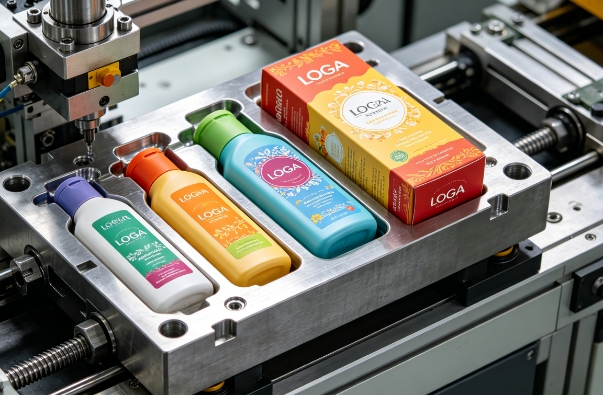
High-Quality Graphics Create Stronger Brand Recognition
Visual quality is one of the most important factors in successful packaging design. Consumers often judge product quality based on packaging appearance before making a purchase decision. In mold labeling allows manufacturers to achieve highly detailed and visually impressive packaging results.
The technology improves graphic quality in several important ways:
- High-resolution printing supports sharp text, vivid colors, and detailed product images that attract attention on retail shelves.
- Complex patterns, gradients, and multi-color designs can be reproduced with excellent consistency during mass production.
- Labels are permanently integrated into the product surface, preventing distortion or wrinkles that could reduce visual quality.
- Packaging maintains its original appearance even after transportation, handling, and long-term storage.
Because branding elements remain clear and attractive throughout the product lifecycle, companies can strengthen customer trust and improve overall brand perception.
Seamless Decoration Enhances Premium Product Appearance
Traditional labeling methods sometimes create visible edges, bubbles, or peeling problems that negatively affect product appearance. Modern consumers, however, increasingly prefer clean and sophisticated packaging designs that reflect premium quality.
The seamless nature of this technology offers several visual advantages:
- Labels become part of the container itself, creating a smooth and integrated surface.
- No additional adhesive layers are visible, resulting in a cleaner and more professional finish.
- Full-wrap decoration allows brands to maximize the printable area for logos, instructions, and promotional content.
- Different textures, such as glossy, matte, or metallic effects, can be added to support unique brand identities.
This seamless appearance is especially valuable for industries such as cosmetics, beverages, and luxury food packaging, where packaging design strongly influences consumer impressions.
Greater Design Flexibility for Creative Packaging
Modern brand building requires packaging to stand out in a crowded market. Companies need the freedom to experiment with colors, shapes, textures, and visual storytelling to create stronger emotional connections with consumers.
In mold labeling supports creative packaging development by offering flexible design possibilities:
- Even on curved or irregular container surfaces, high-quality decoration can be achieved without any alignment issues.
- Brands can use transparent, textured, or special-effect labels to create unique visual experiences.
- Seasonal packaging designs and limited-edition graphics can be produced efficiently for promotional campaigns.
- Detailed product information and branding messages can be integrated without overcrowding the package layout.
This flexibility allows companies to develop packaging that better reflects brand personality while adapting quickly to changing market trends and consumer preferences.
Improved Durability Protects Long-Term Branding
A visually attractive package loses value if the label becomes damaged during transportation or daily use. For many industries, maintaining branding quality throughout the product lifecycle is essential for customer satisfaction and professional presentation.
Unlike traditional stickers, the label used in this process is fused directly into the plastic product during manufacturing. As a result, packaging gains several durability advantages:
- Resistance to scratches helps preserve printed graphics during shipping and retail display.
- Moisture protection prevents label damage in refrigerated or humid environments.
- Oil and chemical resistance improve packaging performance for household and industrial products.
- The integrated structure prevents peeling, lifting, or fading over time.
These features ensure that logos, product information, and promotional graphics remain visually appealing even under demanding conditions.
Conclusion
As packaging continues to evolve into a powerful branding tool, companies are placing greater importance on visual quality, durability, and consumer appeal. In mold labeling helps businesses achieve these goals by combining premium graphics, seamless decoration, creative design flexibility, and long-lasting performance in a single manufacturing process. The technology not only improves shelf visibility but also strengthens brand recognition and customer trust across various industries. With growing demand for high-end packaging and efficient production solutions, in mold labeling is becoming an increasingly valuable option for brands seeking stronger market competitiveness and enhanced visual presentation.
0