Table of Contents
It seems that the expansion of the 2026 FIFA World Cup has been completed, and European football is moving into an extremely aggressive transitional phase. The 10-year-old shadows of past generations are officially history now. With the start of the 2026/27 season in European club football, it seems that elite tactical plans require constant pressing, absolute positional flexibility, and physical work out of control, and today’s young generation has all of this every single week.
Combining the competition for the Golden Boy with the demands of the expanded Champions League format, a very unique group of Under-21 talents have managed to become the structural focal points for the biggest clubs in Europe.

1. The Established Leaders: Setting the World Standard
Some young players no longer fit the traditional “wonderkid” label because they already dictate high-stakes games at the highest possible level.
Lamine Yamal (Barcelona)
At just 19 years old, Lamine Yamal has completely outgrown early comparisons to past club icons.He acts as the main anchor in Barcelona’s tactical play from the right flank. His decision-making on the pitch in the final third is that of an experienced player in his best years, who knows exactly when to stretch the pitch, when to push in to make overloads, or when to provide a crucial low ball into the penalty area. By 2026, he is not just a contender for personal accolades but a real contender for all the football accolades.
Endrick (Real Madrid)
Competing in a stacked Real Madrid frontline requires ruthless efficiency, and Endrick provides exactly that. In light of his physical explosiveness and natural propensity to take shots from even poor opportunities, he is always at risk of being sent to the penalty box. In the context of tactical rotations that require greater depth in the squad during the 2026/27 season, his capability of breaking tough low blocks in the box makes him structurally better than any other opponent.
2. The Breakout Phenomena Redefining the Game
Beyond the established names, several young profiles have broken out over the past year to fundamentally shift how top European managers set up their teams on matchday:
Estêvão (Chelsea)
Adjusting to the pace and physicality of the English Premier League is something that often takes some time for youngsters who emerge from South America directly. Estêvão, on the other hand, never had to make such an adjustment. As a winger playing for Chelsea, his sudden change of pace and unpredictability in his dribbling allow the opposition to always double-mark him, thus leaving space for the central players to exploit.
Pau Cubarsí (Barcelona)
Modern defensive schemes prioritize build-up play as much as tackling, and Pau Cubarsí epitomizes this modern center-back profile. Standing out for his remarkable composure under heavy opposition pressure, his ability to hit crisp, flat line-breaking passes directly into the midfield turns defense into attack in a single tempo shift. He remains one of the few pure central defenders capable of driving a top club’s underlying possession metrics.
Franco Mastantuono (Real Madrid)
After making his high-profile move to European football, Franco Mastantuono quickly adapted to Real Madrid’s fluid midfield setups. He brings classic South American flair combined with modern tactical discipline. Playing as an advanced central playmaker or drifting out wide, his sharp half-turn turns defensive transitions into immediate scoring opportunities, while his elite technique on set pieces adds a valuable scoring weapon.
Kobbie Mainoo (Manchester United)
A calm demeanor in the face of heavy pressure is a very scarce quality in central midfield. Kobbie Mainoo keeps on proving that he possesses the quality of resisting the press despite being very young. Whatever he plays – in the double pivot formation or as a roaming central midfielder, he uses his body tricks and first touches to escape from the clutches of the opposition players.
3. Structural Factors Driving the 2026 Youth Explosion
Why are 18-to-20-year-olds taking over the highest levels of football faster in 2026 than in previous decades? Three main structural factors explain this massive shift across European leagues:
Exhaustive match schedules: The additional burden on European club scheduling, combined with the increase in the size of international tournaments, has meant that the physical demands have reached an absolute peak. The best clubs will have to rotate heavily, allowing starters’ minutes to be available for the young players who will recover quickly from the matches.
Tactical Demand for High-Mobility: Pressing systems demand quick counter-pressing and high-intensity off-the-ball work. It is the case that young players provide the athletic prowess to make this possible over the full 90 minutes.
Transfer Strategy: Instead of shelling out millions for star players nearing their mid-twenties, the top sporting directors in Europe now invest their financial resources in U21 talent. These young talents will then allow the teams to continue to compete at the highest level tactically.
4.Conclusion
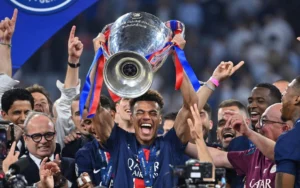
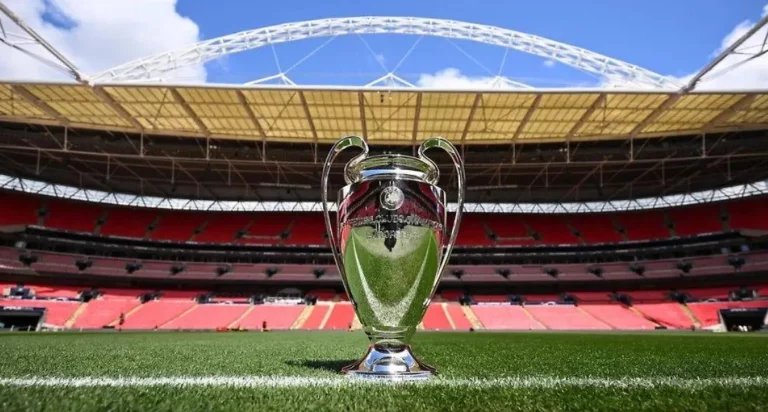
The sport of football works in fast cycles; however, 2026 is going to see a definite change of the guard. The superstars making the headlines now are not merely future faces of football; right now they are influencing the style of play of European leagues. And it is very clear that whoever manages to harness the talent of these future stars well enough in the current European campaign will be lifting the cup at the end of May.
Who among these rising stars will become the new Golden Boy and help his team win the Champions League this year? Comment below with your tactical predictions!
0