Table of Contents
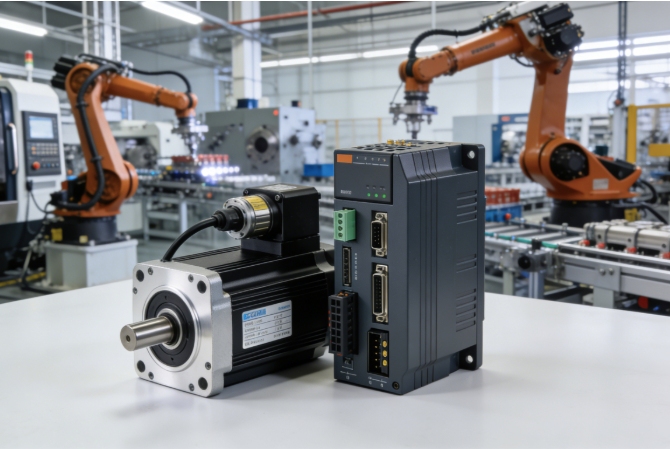
An integrated servo motor is an advanced type of motor system that combines the motor, encoder, and servo drive into a single compact unit. Unlike traditional servo setups, which require separate components and extensive wiring, an integrated servo motor simplifies installation, minimizes wiring complexity, and improves overall system reliability. These motors are specifically engineered to deliver precise motion control, making them essential for applications in industrial automation, robotics, CNC machinery, precision manufacturing, and smart automated systems. Their combination of high performance, compact size, and intelligent control capabilities makes them a core component in modern automation technology.
Key Advantages of Integrated Servo Motors
- Compact Design and Space Efficiency
By integrating the motor, encoder, and drive into a single unit, integrated servo motors eliminate the need for external drives, controllers, and additional cabling. This design significantly reduces the space required within machinery, allowing engineers to design smaller, more efficient machines. Compactness also helps in applications where space is limited, such as collaborative robots, medical devices, or compact production lines, without compromising performance. - Improved Precision and High Performance
Integrated servo motors feature built-in encoders that provide high-resolution feedback for precise position, speed, and torque control. The servo drive, embedded within the motor, allows rapid response to control signals, ensuring smooth motion even under variable loads. This precision is crucial in robotics for accurate arm movement, in CNC machinery for fine tool positioning, and in packaging machines where high-speed synchronization is required. Additionally, the integration reduces communication delays between motor and drive, improving overall system responsiveness. - Simplified Installation and Reduced Maintenance
With fewer external components, wiring becomes simpler, reducing potential points of failure. Engineers can deploy systems faster, with a lower risk of wiring errors or misconfigurations. Maintenance is also simplified because there are fewer parts to inspect or replace. This minimizes downtime, lowers labor costs, and increases long-term reliability, making integrated servo motors suitable for continuous industrial operations where uptime is critical. - Enhanced Energy Efficiency and Sustainability
Integrated servo motors are designed to optimize energy usage by reducing losses between the motor and drive. Energy-efficient operation lowers electricity costs and reduces heat generation, which can prolong the life of both the motor and surrounding components. For companies seeking to improve sustainability, integrated servo motors offer a smaller carbon footprint compared to traditional separate systems, aligning with green manufacturing and energy-saving goals.
Applications in Automation
Integrated servo motors have versatile applications across various industries, including:
- Robotics: Ensures precise and smooth motion control for robotic arms, automated assembly systems, and collaborative robots, enabling high-speed, accurate movements in manufacturing and warehousing environments.
- CNC Machinery: Provides exact positioning and repeatable accuracy for machining, milling, engraving, and 3D printing processes, supporting high-precision manufacturing.
- Packaging Equipment: Delivers synchronized motion in high-speed packaging lines, reducing errors and increasing production throughput for industries such as food, beverage, and pharmaceuticals.
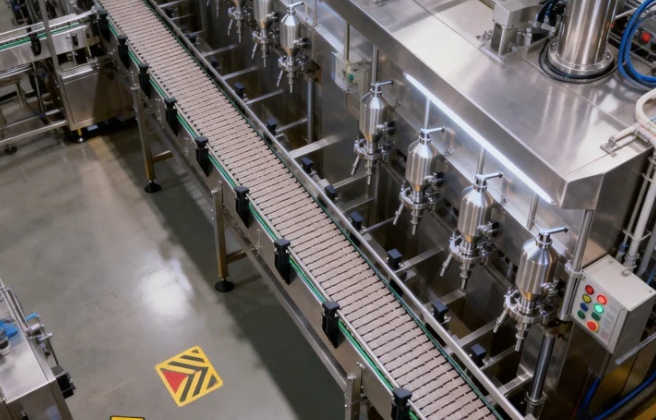
- Conveyor Systems: Maintains consistent speed and torque for material handling, logistics automation, and smart factory workflows, improving efficiency and product flow consistency.
- Medical and Laboratory Automation: Supports precise motion control in lab equipment and medical devices, where reliability and accuracy are critical.
Conclusion
In conclusion, the integrated servo motor is a cornerstone technology for modern automation systems. Its compact design, high precision, simplified installation, reduced maintenance requirements, and energy-efficient operation make it an ideal solution for industries seeking productivity, reliability, and long-term performance. By combining motor, encoder, and drive into a single unit, it not only reduces system complexity but also maximizes responsiveness and control accuracy. Integrated servo motors provide a smart, efficient, and sustainable solution for industrial automation challenges, driving innovation across robotics, CNC machinery, packaging, logistics, and beyond.
0