Table of Contents
Introduction
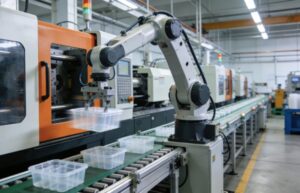
Servo robots provide efficiency and accuracy in a wide range of industrial applications, making them an essential part of today’s automation. An essential component of these robots’ operations, servo systems enable smooth regulation of their movement and positioning. To demonstrate the relevance of servo robots in modern robotics and production, this article explores parts, types, and uses.
The Servo Robot: What Is It?
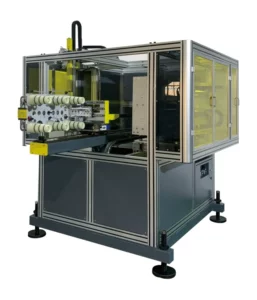
Robots that use servo motors for accurate control and movement are called servo robots. Servo motors are controlled by signals that specify their location, speed, and acceleration, as opposed to conventional motors that rely on an easy power source. Servo robots are perfect for applications that demand precise control because of this feature, which allows them to execute complicated tasks with high precision.
Servo Robot Essential Parts
A servo robot is built with the following essential parts:
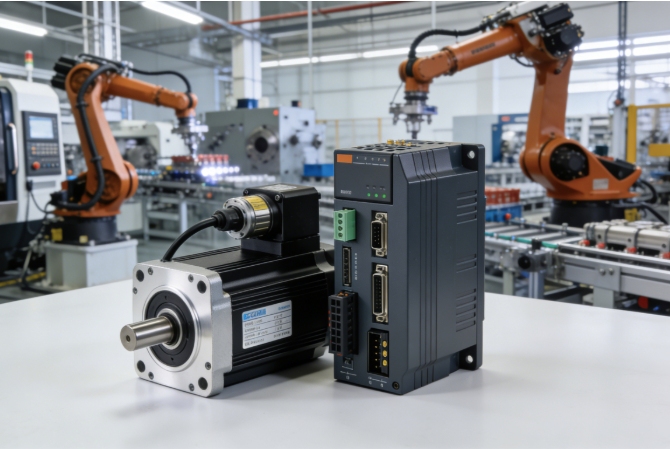
- Servo motor: The primary component of the robot that controls its mobility is the servo motor. To guarantee accurate alignment, it integrates a motor with a feedback mechanism.
- Controller: The controller takes in data from the sensors and uses it to instruct the servo motor to move in a specific way.
- Feedback device: This device, which is usually an encoder or a potentiometer, measures the position of the motor and transmits that information back to the controller so that it can be adjusted.
- Power supply: A power supply is a component that supplies the servo motor with the energy it needs to function properly.
Types of Servo Motors
Two primary types of servo motors are:
- Analog servos: Operate analog servos utilizing voltage pulses that are on and off. They use less power than digital servos but are typically slower to respond.
- Digital servos: Improved accuracy and quicker reaction times are achieved using digital servos that use a microprocessor. Their increased signal processing speed enables them to adjust motion control.
Advantages of Servo Robots
Servo robots have many benefits that make them useful in many different industries:
- Accurate control: According to the feedback mechanisms that are integrated, positioning and movement may be performed with great consistency.
- Efficiency: Servo motors reduce operational costs by consuming energy only when necessary.
- Flexibility: Their versatility makes them well-suited for a wide range of uses, from complex robotic procedures to production lines.
- Scalability: The scalability of servo systems allows them to be quickly modified or extended to meet changing production demands.
Applications of Servo Robots
The adaptability and accuracy of servo robots make them useful in many different fields:
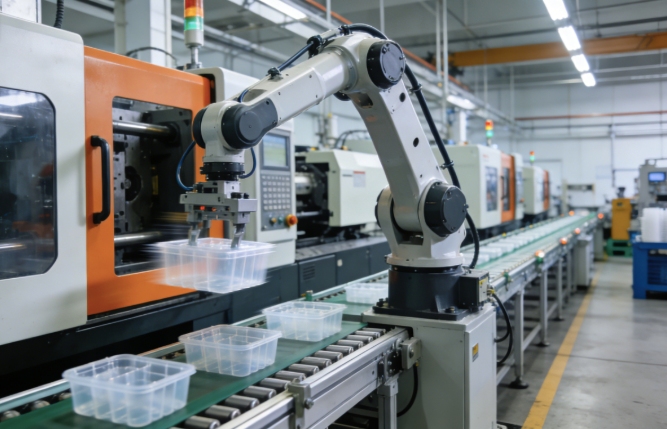
- Manufacturing: Assembly line welding, painting, and packing are just a few examples of the manufacturing tasks that servo robots perform.
- Aerospace: In the aerospace industry, they facilitate the precise assembly of complicated parts.
- Automotive industry: Used for robotic assembly and welding in the automotive industry, where accuracy is important.
- Medical field: Used in surgical robots that necessitate precise measurement in the medical field.
- Consumer electronics: For consumer electronics, this means using robots for testing and assembly.
Conclusion
One major development in the field of automation is servo robots. They are essential in many fields due to the exact control they offer over movements. The capabilities of servo robots are anticipated to grow in the future as technology advances, opening the door to new applications that boost efficiency and productivity in several industries. To keep these systems at the leading edge of industrial automation, smarter technologies will reshape their operation.
0