Table of Contents
Choosing the right educational toy for children is more important than many parents realize. Toys are no longer just entertainment tools; they also influence creativity, communication skills, logical thinking, and emotional development. However, with so many products on the market, it can be difficult to decide which ones truly provide learning value. Parents should not only focus on appearance or popularity but also pay attention to safety, age suitability, educational functions, and long-term usability. A reliable educational toy manufacturer can often provide products designed with child development in mind, helping children learn while enjoying playtime.
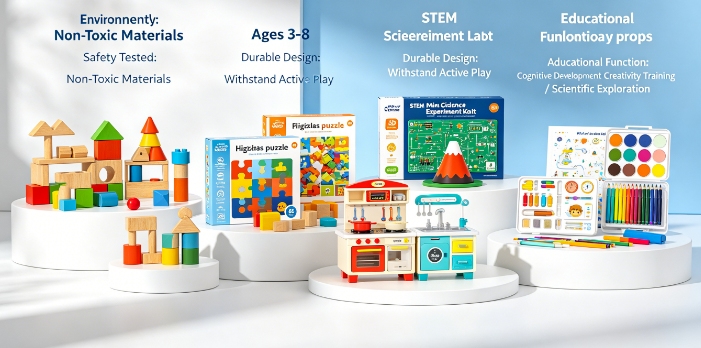
Safety and material quality should always be placed first.
When selecting toys for children, safety is the first factor parents should evaluate. Educational value means very little if the product cannot meet proper safety standards. Before purchasing, parents should carefully inspect the toy’s material, structure, and certifications.
- Choose non-toxic and eco-friendly materials
Children often touch toys for long periods and may even place them in their mouths. Toys made from BPA-free plastic, natural wood, or food-grade silicone are usually safer options. Avoid products with strong chemical smells or poorly painted surfaces, as these may contain harmful substances. - Check for smooth edges and durable construction
High-quality educational toys should have smooth corners and firmly attached parts. Loose components can become choking hazards for younger children. Durable construction also ensures that the toy can withstand repeated use without breaking easily. - Look for international safety certifications
Products certified under standards such as ASTM, EN71, or CPC often provide greater confidence regarding safety and quality. A professional educational toy manufacturer usually invests in testing and certification to meet global market requirements.
Consider Whether the Toy Matches the Child’s Age and Interests
Not every educational toy is suitable for every child. A toy that is too advanced may frustrate children, while one that is too simple may quickly become boring. Parents should carefully evaluate developmental stages and personal interests before making a purchase.
- Age-appropriate learning goals
Toddlers may benefit from shape sorting, color recognition, or sound-based toys, while older children may enjoy science kits, building blocks, or coding games. The difficulty level should encourage learning without causing stress. - Alignment with the child’s personality
Some children prefer hands-on building activities, while others enjoy artistic or musical play. Understanding a child’s natural interests can increase engagement and improve the learning experience. - Room for growth and creativity
The most effective toys usually provide a variety of ways for children to engage and play. Open-ended toys, such as construction sets or role-playing kits, allow children to use their imagination and develop new skills over time instead of following a single repetitive activity.
Educational Value Should Go Beyond Simple Entertainment
Many toys advertise themselves as educational, but not all of them genuinely support learning. Parents should focus on toys that encourage active thinking rather than passive entertainment.
Toys that support problem-solving skills
Puzzle games, STEM building sets, and strategy-based activities can strengthen logical thinking and patience. Children learn how to analyze situations, test ideas, and find solutions independently.
Toys that improve communication and social abilities
Role-play toys, board games, and collaborative activities help children practice teamwork and communication. These experiences are valuable for emotional intelligence and social confidence.
Toys that encourage creativity and imagination
Art supplies, music toys, and creative construction kits allow children to express themselves freely. Creative play can improve innovation, storytelling ability, and independent thinking.
Instead of focusing only on flashy electronic features, parents should consider whether the toy helps children actively participate, think, and explore new concepts.
Durability and Long-Term Learning Benefits Matter
Educational toys are often an investment, so parents should evaluate whether the product can provide long-term value. A toy that becomes useless after a few days may not justify its cost.
- Reusable learning opportunities
Toys with adjustable difficulty levels or multiple activities can continue challenging children as they grow. For example, building blocks can support both simple stacking for toddlers and complex engineering projects for older children. - Easy maintenance and storage
Toys that are easy to clean and organize are more practical for everyday family use. Washable materials and compact storage designs can save parents time and effort. - Balanced screen interaction
While digital learning toys can be useful, excessive screen exposure may reduce physical activity and face-to-face interaction. Parents should look for products that combine technology with hands-on engagement.
A trustworthy educational toy manufacturer often focuses on designing products with durability, flexibility, and educational depth rather than short-term trends.
Conclusion
Buying an educational toy involves much more than selecting something colorful or popular. Parents should carefully consider safety, material quality, age suitability, creativity, and long-term educational value before making a decision. The ideal toy should inspire curiosity, support healthy development, and encourage children to think independently while having fun. By choosing products thoughtfully, families can create meaningful learning experiences that positively influence a child’s growth for years to come.
0