Table of Contents
When selecting tableware for home, restaurant, or outdoor use, many buyers often compare melamine dinnerware sets with traditional ceramic options. Both materials are widely used in modern dining environments, but they differ significantly in terms of durability, safety, appearance, cost, and practical usage scenarios. Understanding these differences helps consumers make smarter purchasing decisions based on their lifestyle and needs. While ceramic tableware is known for its classic elegance and premium feel, melamine dinnerware sets are increasingly popular for their lightweight design, durability, and versatility in everyday and commercial use.
Material Composition and Basic Characteristics
The fundamental difference between melamine dinnerware sets and ceramic tableware lies in their material structure and manufacturing process:
- Melamine material properties
Melamine dinnerware sets are made from melamine resin, a durable thermosetting plastic that is molded under high pressure and temperature. This gives the product a hard surface, a lightweight structure, and resistance to breakage. - Ceramic composition
Ceramic dinnerware is made from natural clay that is shaped and fired at high temperatures. This process creates a dense, rigid structure with a smooth glazed finish that is often considered more premium in appearance. - Key physical differences
Melamine products are significantly lighter and more impact-resistant, while ceramic tableware tends to be heavier and more fragile but offers a more traditional aesthetic appeal.
Durability, Safety, and Daily Usage
Durability is one of the most important factors when comparing these two types of dinnerware, especially for households with children or high-traffic food service environments:
- Impact resistance and breakage risk
Melamine dinnerware sets are highly resistant to breaking, chipping, or cracking, making them ideal for outdoor dining, catering, and casual family use. In contrast, ceramic plates can easily break when dropped or mishandled. - Heat resistance and usage limits
While ceramics can safely withstand high oven temperatures, melamine has heat limitations and should not be used in microwaves or extremely high-temperature cooking environments. - Food safety considerations
High-quality melamine dinnerware sets are food-safe when used correctly, but they must comply with safety standards. Ceramic tableware is generally considered inert and stable under most conditions.
Design, Appearance, and User Experience
A major deciding factor for many consumers is the visual appeal and dining experience each material provides:
- Aesthetic variety in melamine designs
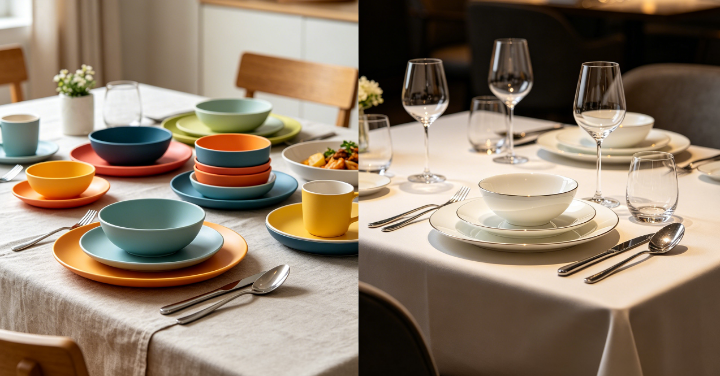
Melamine dinnerware sets are available in a wide range of colors, patterns, and textures, often designed to mimic ceramic or porcelain styles while offering more design flexibility. - Traditional elegance of ceramics
Ceramic tableware is often associated with luxury dining and fine table settings. Its glossy glaze and weight provide a premium feel during use. - Practical dining experience comparison
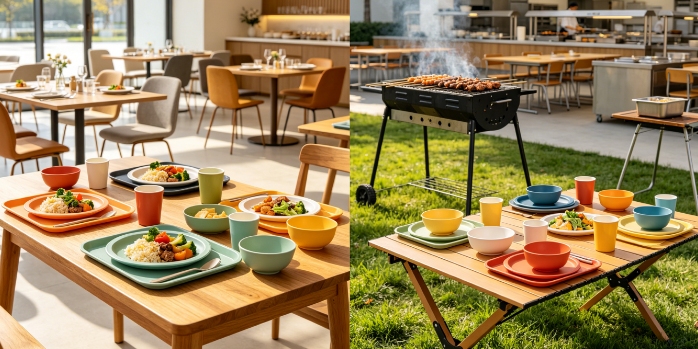
Melamine is lightweight and easy to handle, making it suitable for buffets and outdoor events, while ceramics offer a more formal dining experience but require careful handling.
Cost, Maintenance, and Practical Value
From a cost and maintenance perspective, the differences between melamine dinnerware sets and ceramic options are also significant:
- Affordability and replacement cost
Melamine products are generally more affordable, especially for bulk purchases such as restaurants or catering businesses. Ceramic tableware tends to be more expensive due to its manufacturing process. - Cleaning and maintenance convenience
Melamine dinnerware sets are easy to clean and dishwasher safe in most cases, making them highly practical for daily use. Ceramic dishes also clean well, but may require more careful handling to avoid damage. - Long-term usage value
Because melamine is resistant to breakage, it often lasts longer in high-use environments, reducing replacement frequency and overall operational cost.
Ideal Use Scenarios and Buyer Considerations
Choosing between melamine and ceramic depends heavily on where and how the tableware will be used:
- Home and family use cases
Melamine dinnerware sets are ideal for families with children, outdoor dining, picnics, and casual meals due to their safety and durability. - Restaurant and hospitality industry
Many restaurants, cafes, and catering services prefer melamine because it reduces breakage costs and improves service efficiency. - Formal dining and luxury settings
Ceramic tableware is better suited for fine dining restaurants, hotels, and formal events where presentation and tradition are more important than durability.
Conclusion
In conclusion, both melamine dinnerware sets and ceramic tableware have their own advantages depending on usage needs and personal preferences. Melamine stands out for its durability, lightweight structure, affordability, and practicality, making it ideal for everyday and commercial use. Ceramic, on the other hand, offers a more elegant and traditional dining experience, suitable for formal settings and decorative purposes. When choosing between the two, buyers should carefully consider factors such as environment, budget, safety, and aesthetic preference. Ultimately, the best choice depends on balancing functionality with style to meet specific dining requirements.
0