Table of Contents
Melamine dinnerware is widely used across homes, restaurants, cafeterias, and outdoor catering services due to its durability, lightweight structure, and cost efficiency. Compared with traditional ceramic or glass tableware, melamine offers superior resistance to breakage and is easier to handle in high-traffic environments. However, it is not suitable for every situation, especially those involving high heat, such as microwaving or cooking. Understanding the most appropriate environments for melamine dinnerware helps users maximize its advantages while ensuring safe and long-term use in daily operations.
Commercial Food Service Environments
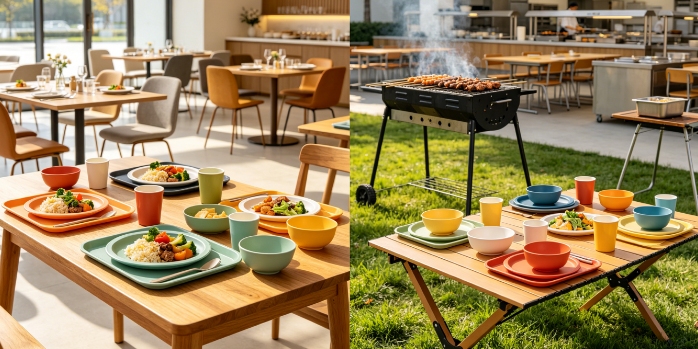
One of the most common and suitable environments for melamine dinnerware is the commercial food service industry, where durability and efficiency are essential.
- Restaurants and cafeterias: In fast-paced dining environments, dishes are constantly handled, washed, and reused. Melamine’s high impact resistance reduces breakage costs and ensures smooth daily operations.
- Buffet and self-service areas: Since customers frequently handle plates themselves, lightweight and shatter-resistant properties make melamine safer and more practical.
- Catering services and banquets: Large-scale events require large quantities of tableware that are easy to transport, stack, and clean, making melamine highly efficient for logistics.
- Food courts and fast food outlets: High turnover environments benefit from melamine’s quick cleaning cycle and durability under constant use.
In these settings, melamine dinnerware significantly improves operational efficiency and reduces replacement costs.
Household and Family Dining Environments
Melamine dinnerware is also highly suitable for everyday household use, especially in families with children or active lifestyles.
- Family kitchens: It is ideal for daily meals because it is lightweight, easy to handle, and resistant to accidental drops during busy home routines.
- Children’s dining use: Parents often choose melamine for kids due to its safety advantage—unlike glass or ceramic, it does not shatter into sharp pieces when dropped.
- Casual indoor dining: It works well for breakfast, lunch, and dinner service, especially when convenience and durability are more important than luxury presentation.
- Multi-person households: In homes with frequent gatherings or shared dining, melamine helps reduce breakage and maintenance stress.
Its practicality makes it a strong everyday solution for modern families.
Outdoor and Recreational Environments
Another highly suitable application for melamine dinnerware is outdoor and recreational dining, where portability and durability are key requirements.
- Picnics and camping trips: Lightweight design makes it easy to carry, while its shatter-resistant nature ensures safety during outdoor activities.
- Barbecue and garden parties: In environments where glass is risky, melamine provides a safe and reusable alternative for serving food and drinks.
- Travel and road trips: It is convenient for mobile dining setups where durable and reusable tableware is needed.
- Beach or park gatherings: Its resistance to accidental drops and easy cleaning make it ideal for relaxed outdoor dining experiences.
These environments highlight melamine’s strength in portability and convenience.
Institutional and Educational Environments
Melamine tableware is also widely utilized in various institutional settings, where safety, durability, and cost control are of paramount importance.
- Primary, secondary, and higher education institutions: School cafeterias benefit from the shatter-resistant properties of melamine, thereby reducing safety risks and lowering replacement frequency.
- Hospitals and healthcare facilities: Lightweight and hygienic surface properties make it suitable for controlled food service environments.
- Corporate dining halls: Large organizations use melamine to support daily meal services with minimal maintenance requirements.
- Training centers and dormitories: High usage frequency makes durable and low-cost tableware a practical choice.
In these environments, melamine helps maintain efficiency while ensuring safety and hygiene.
Environments Where Melamine Is Not Recommended
Although melamine dinnerware is highly versatile, there are certain environments where it should not be used due to safety limitations.
- Microwave Heating Environment: Never use for heating food in a microwave oven, to avoid potential issues arising from heat sensitivity and safety hazards.
- Oven or stovetop cooking areas: Direct exposure to high heat can damage the material structure.
- High-temperature sterilization systems: Excessive heat exposure may cause surface degradation over time.
- Industrial chemical cleaning zones: Harsh chemicals may reduce surface quality and shorten product lifespan.
Avoiding these conditions ensures the longevity and safe performance of melamine products.
Conclusion
In summary, melamine tableware is best suited for environments with high demands for durability, safety, and frequent handling—such as restaurants, households, outdoor activities, and institutional dining settings. Its lightweight structure, break resistance, and cost efficiency make it an excellent choice for high-usage situations. However, it should be avoided in high-heat cooking or microwave environments. By using it in the right settings, users can fully benefit from its practicality, long lifespan, and reliable performance in modern dining applications.
0