Table of Contents
Choosing the right soil is one of the most important factors in successfully cultivating Loropetalum chinense bonsai. While many beginners focus mainly on watering or pruning, the soil type actually determines root health, nutrient absorption, and long-term plant stability. A poor soil mix can quickly lead to root rot, weak growth, or nutrient deficiency, even if other care practices are correct. To ensure healthy development, growers must understand what kind of soil structure works best for Loropetalum chinense bonsai and how to maintain the right balance between drainage, aeration, and moisture retention.
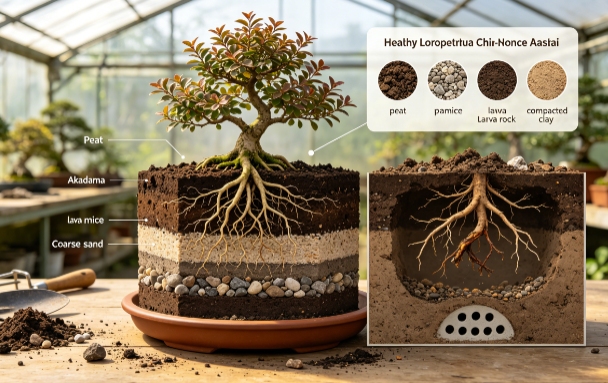
Ideal Soil Composition for Loropetalum Chinense Bonsai
The best soil for Loropetalum chinense bonsai is a well-balanced mix that supports both drainage and moisture retention while allowing oxygen flow to the roots.
- Balanced organic and inorganic mix:
A combination of organic materials (such as peat moss or compost bark) and inorganic components (such as pumice or coarse sand) creates a stable environment for Loropetalum chinense bonsai root growth. - Recommended soil ratio:
A common and effective mix is 40% organic material, 30% akadama or clay-based particles, and 30% drainage-enhancing materials. This structure helps maintain consistent moisture without waterlogging. - Avoid heavy garden soil:
Dense soil retains too much water and restricts airflow, which can suffocate the roots of Loropetalum chinense bonsai and lead to decay. - Light and breathable structure:
The ideal soil should feel loose and granular, allowing water to pass through quickly while still retaining enough moisture for daily plant needs.
A properly balanced mix is the foundation for strong and healthy Loropetalum chinense bonsai development.
Drainage and Aeration Requirements
Good drainage and aeration are critical for preventing root diseases and ensuring the long-term survival of Loropetalum chinense bonsai.
- Fast water movement:
The soil should allow excess water to drain within seconds after watering. Standing water is harmful and can quickly damage Loropetalum chinense bonsai - Air circulation around roots:
Oxygen is essential for root respiration. A well-aerated soil structure ensures that the roots of Loropetalum chinense bonsai remain active and healthy. - Use of coarse particles:
Materials like perlite, pumice, or volcanic rock improve soil porosity and prevent compaction over time. - Preventing soil compaction:
Over time, organic matter can break down and compress the soil. Regular soil replacement helps maintain proper structure for Loropetalum chinense bonsai.
Without proper drainage and aeration, even a healthy plant can quickly decline.
Moisture Retention and Nutrient Balance
While drainage is important, the soil must also retain enough moisture and nutrients to support the continuous growth of Loropetalum chinense bonsai.
- Controlled water retention:
The soil should hold enough moisture between watering sessions to prevent dehydration, especially in warm seasons. - Nutrient-rich organic matter:
Organic components slowly release nutrients, supporting steady growth and vibrant foliage in Loropetalum chinense bonsai. - Avoid excessive dryness:
Soil that dries too quickly can stress the plant and lead to leaf drop or weak branching. - Balanced fertilizer absorption:
A good soil mix helps distribute nutrients evenly, preventing over-concentration in one area of the Loropetalum chinense bonsai
Achieving the right balance between moisture retention and drainage is key to long-term success.
Common Soil Mistakes to Avoid
Many beginners unintentionally use incorrect soil types, which can negatively affect Loropetalum chinense bonsai health. Understanding these mistakes helps improve care results.
- Using standard potting soil:
Ordinary potting soil is overly dense and retains too much moisture, which increases the risk of root rot in Loropetalum bonsai. - Ignoring soil replacement cycles:
Soil breaks down over time, reducing aeration. Failing to report every 1–2 years can weaken plant growth. - Overusing organic material:
Too much organic matter can cause soil to become compact and retain too much water, harming Loropetalum chinense bonsai - Neglecting drainage layers:
Without proper drainage at the bottom of the pot, excess water can accumulate and damage the root system.
Avoiding these mistakes significantly improves the survival rate and health of Loropetalum chinense bonsai.
Repotting and Soil Maintenance Tips
Regular soil maintenance is essential to ensure the long-term growth stability of Loropetalum chinense bonsai.
- Repotting every 1–2 years:
This helps refresh soil nutrients and prevent compaction, giving Loropetalum chinense bonsai roots more space to grow. - Root pruning during repotting:
Trimming old or tangled roots encourages new growth and improves overall plant health. - Refreshing soil mix components:
Replacing part of the old soil with fresh material restores nutrient balance and improves drainage. - Monitoring soil condition regularly:
Checking soil texture and moisture helps identify early signs of degradation in Loropetalum chinense bonsai growing conditions.
Proper maintenance ensures that the soil continues to support healthy development over time.
Conclusion
In summary, the best soil for Loropetalum chinense bonsai is a well-balanced, fast-draining yet moisture-retentive mix that supports both aeration and nutrient delivery. A combination of organic matter and inorganic particles creates the ideal environment for root health and long-term stability. Avoiding heavy or compact soil, maintaining proper drainage, and repotting regularly are essential steps for success. With the right soil choice and care practices, growers can ensure that Loropetalum chinense bonsai remains strong, vibrant, and beautifully shaped throughout its growth cycle.
0