Table of Contents
Wooden kitchen cutting boards are a staple in any kitchen due to their durability, aesthetic appeal, and natural antibacterial properties. However, to keep your wooden kitchen cutting boards in top condition, proper cleaning and maintenance are essential. Without proper care, these boards can harbor bacteria, develop cracks, or lose their natural luster. In this guide, we’ll explore effective methods to clean, maintain, and prolong the life of your wooden cutting boards.
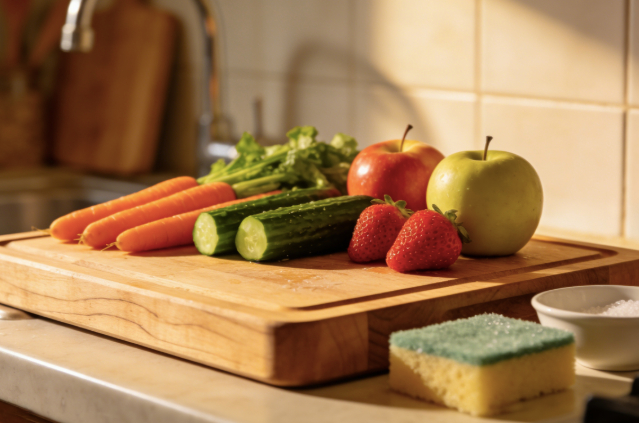
Daily Cleaning Tips for wooden kitchen cutting boards
Maintaining hygiene is the first step in keeping wooden kitchen cutting boards safe and durable. Follow these steps after each use:
- Rinse Immediately: Always rinse your board with warm water right after use to prevent food particles from drying and sticking.
- Use Mild Soap: Apply a gentle dish soap and a soft sponge to scrub the surface. Avoid harsh chemicals or abrasive pads, which can damage the wood fibers.
- Avoid Soaking: Never submerge wooden boards in water, as prolonged exposure can cause warping or splitting.
- Dry Thoroughly: Pat the board dry with a clean towel and let it air dry vertically to prevent moisture accumulation and bacterial growth.
Deep Cleaning Techniques for Stubborn Stains and Odors
Sometimes, wooden kitchen cutting boards absorb strong odors or develop stubborn stains. To tackle these issues effectively:
- Salt and Lemon Method: Sprinkle coarse salt over the surface and rub with half a lemon. The natural acidity and abrasiveness help lift stains and neutralize odors.
- Baking Soda Paste: Mix baking soda with water to form a paste. Apply it to the board and scrub gently to remove discoloration or lingering smells.
- Vinegar Rinse: Occasionally, wipe your board with white vinegar to disinfect naturally. Vinegar helps kill bacteria and contains no irritating chemicals.
Regular Maintenance to Extend Lifespan
Proper maintenance not only improves hygiene but also preserves the board’s strength and appearance. Key practices include:
- Oil Your Board: Apply food-grade mineral oil or beeswax weekly or monthly, depending on usage. This helps prevent the wood from drying out and cracking.
- Avoid Extreme Temperatures: Keep your boards away from direct heat or sunlight, as this can warp or split the wood.
- Use Separate Boards:Consider having separate boards for raw meat and vegetables to reduce cross-contamination and maintain hygiene.
Tips for Safe Use and Storage
The way you use and store wooden kitchen cutting boards also affects their longevity:
- Cut in Different Areas: Rotate the cutting areas to prevent deep grooves in one spot.
- Avoid Metal Scrapers: Don’t use metal utensils or scrapers on the surface, which can damage the wood and create bacteria-harboring grooves.
- Store Vertically: Store boards upright in a dry, well-ventilated area to ensure proper air circulation and prevent mold growth.
Common Mistakes to Avoid
Even with experience, many cooks unintentionally shorten the lifespan of wooden kitchen cutting boards. Avoid these pitfalls:
- Using Dishwashers: The high heat and strong water pressure in dishwashers can cause boards to warp, crack, or lose their smooth surface. Always wash by hand to maintain the wood’s integrity.
- Skipping Regular Oil Treatments: Without periodic application of food-grade mineral oil or beeswax, the wood can dry out, shrink, and develop cracks. Dry boards also absorb liquids more easily, increasing the risk of bacterial growth.
- Ignoring Wear Signs: Deep knife grooves, persistent odors, or discoloration indicate that the board is deteriorating. Ignoring these signs can compromise hygiene and may require timely replacement to ensure food safety.
- Cross-Contamination: Using the same board for raw meat and vegetables without proper cleaning spreads bacteria and can stain the wood, affecting both safety and appearance.
- Improper Storage: Storing boards flat in damp areas traps moisture, leading to mold growth or warping. Store upright in a dry, well-ventilated place.
Conclusion
Proper cleaning and maintenance of wooden kitchen cutting boards are essential for hygiene, durability, and safe food preparation. By following daily cleaning routines, deep cleaning methods, regular oiling, and proper storage techniques, your wooden kitchen cutting boards can last for many years. With careful attention, these boards not only remain functional but also continue to enhance the beauty of your kitchen.
0