Table of Contents
A tomato sauce filling line is more than just one machine—it’s an integrated system designed to wash, fill, cap, label, and package products efficiently. In many factories, these lines can produce 2,000–10,000 bottles per hour, depending on the capacity of the machines and the size of the containers.
From raw sauce preparation to final palletizing, each step in the tomato sauce filling line contributes to the overall quality. By looking at each stage, we can see how technology transforms cooking sauce into commercial goods ready for global distribution.
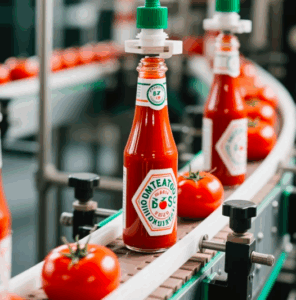
I. Sauce Preparation Before Entering the Tomato Sauce Filling Line
- Raw Ingredient Processing
Before tomato sauce reaches the filling equipment, it begins with fresh or processed tomatoes. They are washed, sorted, and boiled into puree. At this stage, sugar, salt, vinegar, or spices may be added. Industrial kettles equipped with temperature control systems (95–100°C) ensure the sauce is pasteurized and safe for consumption, laying a reliable foundation for the tomato sauce filling line.
- Consistency Adjustment
Not all tomato sauces are the same thickness. To match consumer demand, viscosity is carefully controlled. A thick pizza sauce requires less water, while pasta sauce is often more fluid. This consistency adjustment ensures the sauce can pass through nozzles on the tomato sauce filling line without clogging.
II. Bottle Preparation in the Tomato Sauce Filling Line
- Cleaning and Sterilization
Every bottle or jar must be clean before filling. Automatic rinsing machines wash containers with filtered water or sterilizing solutions. Some factories also use ultraviolet (UV) lamps to kill bacteria without adding chemicals, ensuring that each container entering the tomato sauce filling line is sterile.
- Container Types
The tomato sauce filling line works with glass jars, PET plastic bottles, and sometimes pouches. Each type has unique handling requirements. For example, glass must be cushioned to prevent breakage, while PET bottles require precise heat control to avoid deformation.
III. The Heart of the Tomato Sauce Filling Line: Filling
- Precision Filling Technology
Filling tomato sauce is more complicated than filling water. Because of its viscosity, the machines often use piston fillers or servo-driven pumps that measure exact quantities into each container. High-end systems achieve ±1% accuracy, minimizing waste and maintaining consistent quality on the tomato sauce filling line.
- Speed and Efficiency
Modern filling machines can fill 30–200 bottles per minute, depending on container size. This efficiency allows factories to meet high market demand while maintaining product consistency, a hallmark of an effective tomato sauce filling line.
IV. Capping and Sealing in the Tomato Sauce Filling Line
- Cap Placement
After filling, bottles move to the capping station. Depending on packaging, this could involve screw caps, twist-off metal lids, or heat-sealed foil. The tomato sauce filling line ensures that each cap is placed accurately to maintain hygiene.
- Airtight Protection
Sealing is critical because tomato sauce is perishable. Proper sealing prevents oxygen and bacteria from entering, extending shelf life from a few days to 12–24 months, a key quality aspect of any tomato sauce filling line.
V. Labeling and Branding in the Tomato Sauce Filling Line
- Label Application
Labeling machines apply stickers or shrink sleeves at speeds of up to 300 bottles per minute. Labels display product information and barcodes for retail tracking. Every step in the tomato sauce filling line is designed for efficiency and accuracy.
- Consumer Appeal
A tomato sauce filling line doesn’t just focus on safety; it also ensures products look appealing on the shelf. Perfectly aligned glossy labels build brand identity and consumer trust.
VI. Quality Control and Inspection
- Inline Inspection
Some advanced tomato sauce filling line setups include vision systems to inspect fill level, cap placement, and label alignment. This reduces waste and ensures each container meets quality standards.
- Sampling and Testing
Random sampling is also performed for viscosity, pH, and microbial content. These tests guarantee that each batch processed by the tomato sauce filling line is safe and consistent.
Conclusion
Understanding the workflow of a tomato sauce filling line allows both professionals and newcomers to see how technology ensures that every jar on a supermarket shelf is fresh, safe, and uniform.
0